Wheels
How to Clean Alloy Wheels Properly
Wheels are the dirtiest part of a car. The tools, cleaners and order of operations to clean faces, barrels and calipers without scratching or staining.
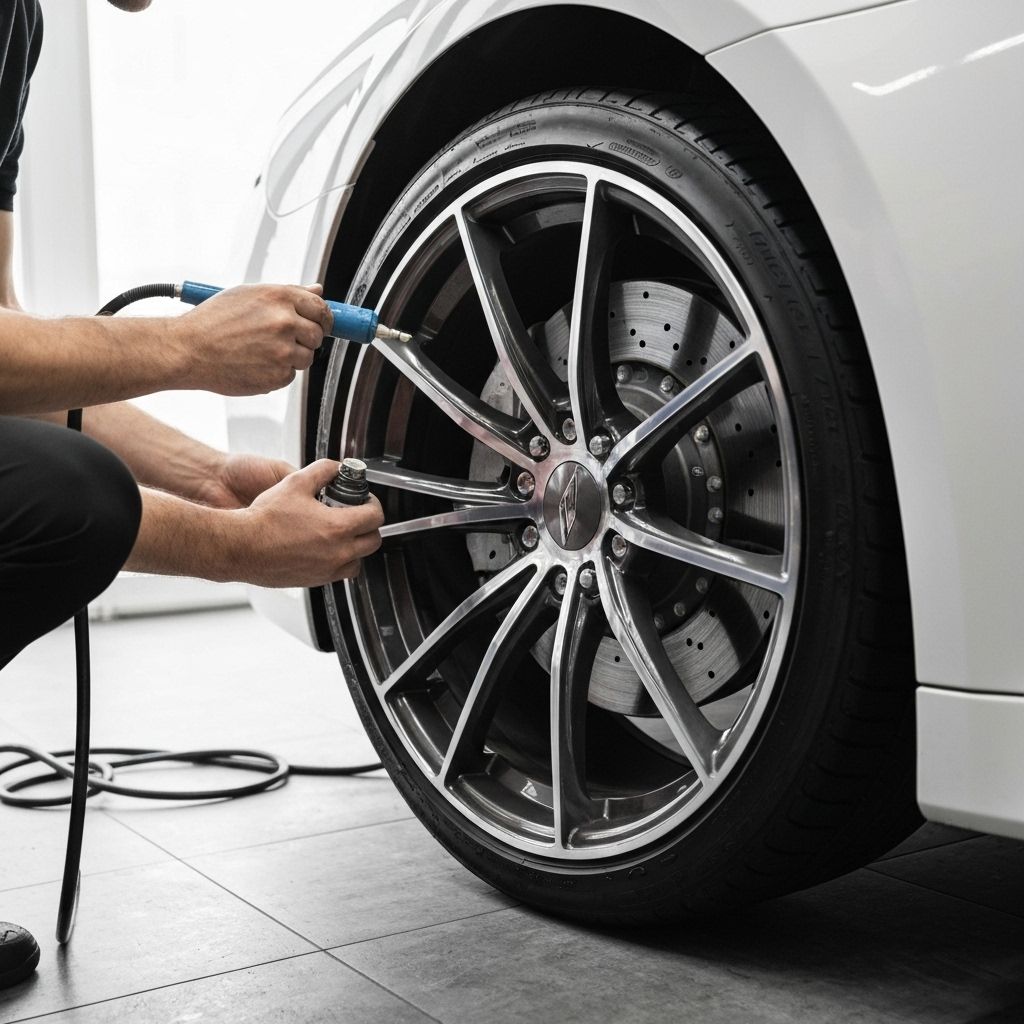
Wheels take more abuse than any other part of a car: brake dust, road grime, tar and heat. Clean wheels make a huge difference in how a car looks, and cleaning them correctly prevents permanent staining.
Know your wheel finish
Painted and clear-coated alloys are the most common and tolerate most wheel cleaners. Polished aluminum, chrome, powder-coated and matte finishes need more care. If you are not sure, start with a pH-neutral wheel cleaner.
Clean them cool
Never spray cleaner on hot wheels right after a drive. Heat makes chemicals dry quickly and can cause staining.
The right tools
- A dedicated bucket for wheels only.
- A soft face brush for spokes and lug nuts.
- A long barrel brush to reach behind the spokes.
- A stiff tire brush.
- A separate mitt and towels that never touch paint.
Step by step
- Rinse the wheel, tire and wheel well to remove loose dirt.
- Clean the tire first with a tire cleaner or diluted APC and the stiff brush.
- Spray wheel cleaner on the face and barrel and let it dwell as directed.
- Agitate the barrel, spokes, lug nut holes and caliper area.
- Rinse thoroughly and repeat on the next wheel.
- Dry the wheels to prevent water spots.
Iron removal
If brake dust is baked on, an iron remover will dissolve it. You will often see it turn purple as it reacts.
Protect them
A wheel sealant or ceramic wheel coating makes brake dust far easier to rinse off and protects the finish from heat and chemicals.
Clean wheels every wash, before the body, so you never splash brake dust onto clean paint.