
Paint Correction
Machine Polishing Basics: Dual Action vs. Rotary Polishers
What machine polishing does, how dual action and rotary polishers differ, and why most paint correction today starts with a DA polisher.
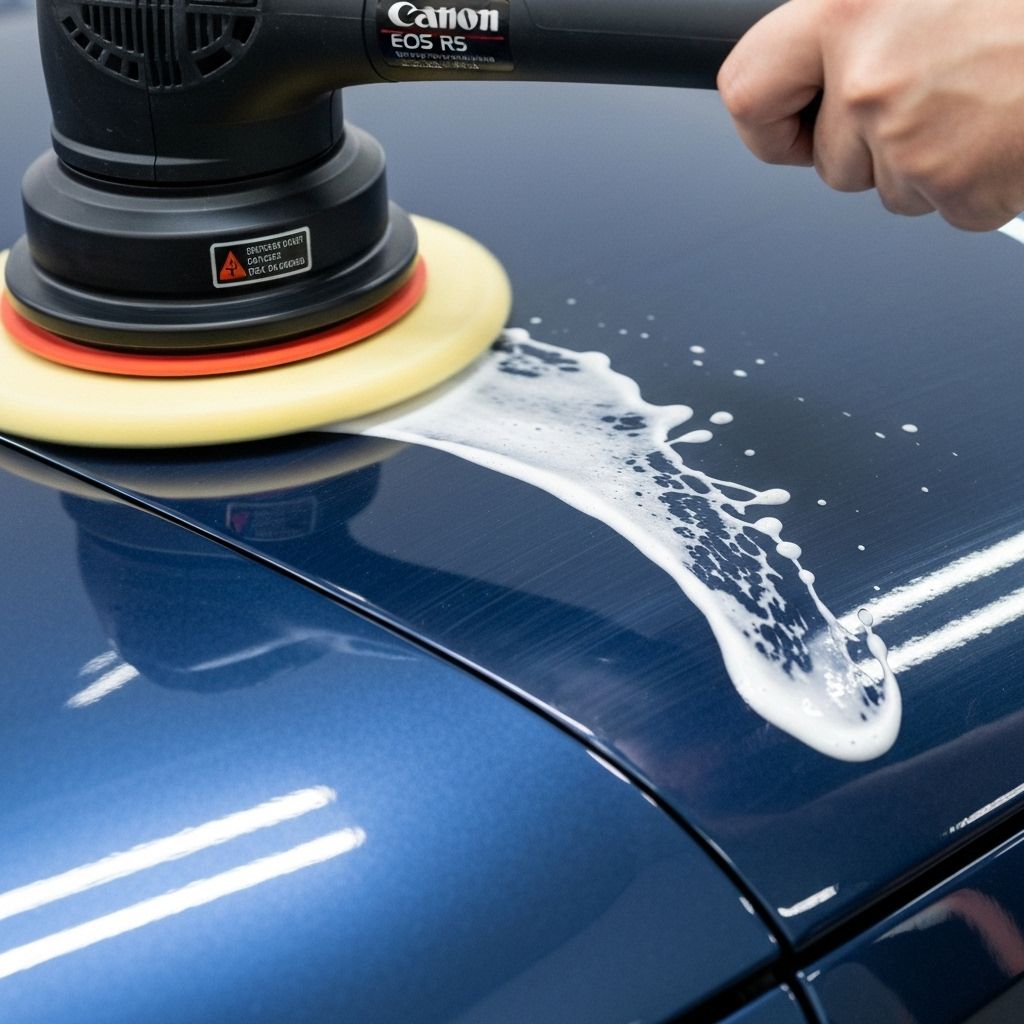
Machine polishing is the process of using a powered polisher, a pad and an abrasive polish to level the very top of your clear coat. When the surface is level, light reflects evenly and the paint looks deep and glossy. When it is full of fine scratches, light scatters and the paint looks dull or swirled.
Why not polish by hand?
Hand polishing can improve gloss slightly, but it cannot generate the consistent speed and pressure needed to remove defects across a whole car. A machine does the same motion thousands of times per minute with even pressure, which is what correction requires.
The dual action (DA) polisher
A DA polisher spins the pad while also moving it in an offset, oscillating orbit. That combination keeps heat down and makes it very difficult to burn through paint. It is the tool most detailers use for the majority of correction work, and it is the safest choice for anyone learning.
Long-throw DA polishers have a larger orbit, which cuts faster on big, flat panels. Smaller DAs with short throws are useful for pillars, bumpers and tight curves.
The rotary polisher
A rotary spins the pad on a single fixed axis. It cuts faster and can remove deeper defects, but it builds heat quickly and can leave buffer trails, called holograms, if not finished correctly. In experienced hands it is a powerful tool for severe defects and heavy sanding marks.
Forced rotation DA
A middle ground exists: forced-rotation DA polishers keep the pad turning under pressure like a rotary while still oscillating. They cut more aggressively than a free-spinning DA with less risk than a rotary.
What determines the result
The machine is only one part. Pad choice, polish choice, speed, arm pace, pressure, panel temperature and how often you clean the pad all affect the finish. Paint hardness varies by manufacturer, so a combination that works on one car may do little on another. That is why every correction should begin with a test spot.
If your paint has visible swirls in the sun, a machine polish is the only way to truly remove them rather than temporarily hide them.